
Explore over 23,000 properties across Cyprus

Managing Director
The Man Behind G&P Lazarou Estate Agents
With more than 33 years in the Cypriot property market, Petros set the standards our consultants work to every day. Message him directly: he will either point you to the right person for your property, or take it on himself.
Featured Properties
Property
Search Made Easy
All Over Cyprus

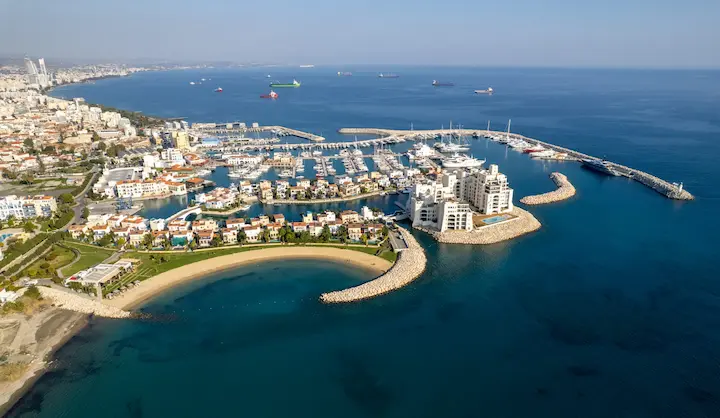
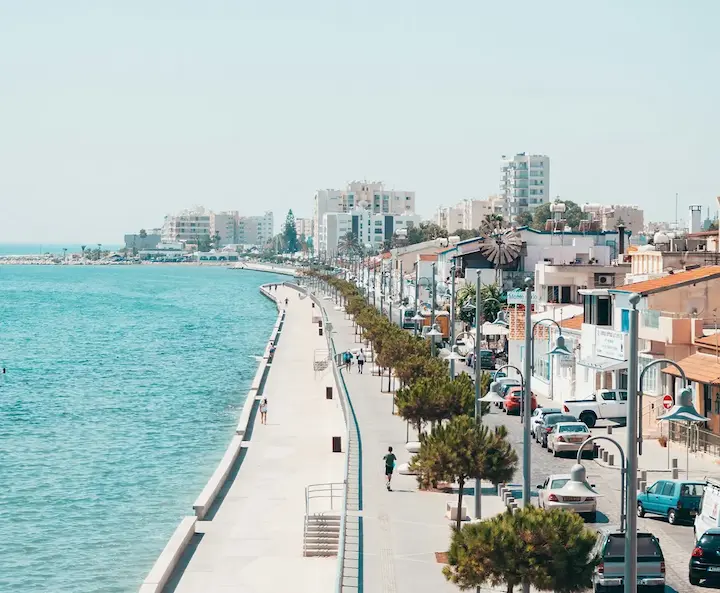


Recently Added
What We Offer

Explore a curated range of properties across premier locations, from coastal villas and suburban homes to city apartments, executive offices, and development land. We help you identify the right opportunities, shortlist your options, and negotiate the best possible terms.

With 33 years of market leadership, we position your property for maximum return. From accurate valuation and strategic pricing to targeted marketing campaigns and access to our extensive buyer network, we ensure maximum exposure and the best possible sale price.

Discover a wide range of verified residential and commercial rental properties, from modern city apartments and family homes to executive office spaces. We simplify your search, assist with contract negotiations, and ensure a seamless rental process from viewing to move-in.

Selling real estate online is an honest and fully transparent process for both the seller and the bidder. G&P Lazarou's online auction platform makes the whole process quick and easy.

Our office provides comprehensive support for the Cyprus Permanent Residency by Investment framework. We assist international clients with property selection and legal coordination. Our goal is to help you obtain residency efficiently. Our specialized Cyprus real estate services focus on enhancing the long-term value of your investment.

With decades of experience in property valuations, we know exactly how to determine the true market value of your asset. Our specialized consultants, provided in cooperation with G&P Lazarou Property Valuation, provide reliable and fully documented appraisals, so you can make informed decisions when selling, buying or investing in real estate.

We support companies with relocation and property-related decisions. Our team can assist you in finding office space and handling property management.
Additionally, we provide guidance on:

If you are planning to build your own home, we can support you from concept to completion. Through close collaboration with reputable developers, we help you identify the right plot. In addition, we proudly act as your project manager to coordinate the full construction process for your new villa or business premises.
About Us
G&P Lazarou Estate Agents was established in 1993 as a two-person office in Nicosia and has grown into one of Cyprus's most trusted estate agencies with offices across the island.
3 offices, 70+ property consultants, 430+ partner developers and AI-powered property search across Cyprus.
Launch of our online property auction platform.
Partnerships with 250 developers and a team of 25 property consultants.
Opening of our Limassol office (April) and Larnaca office (September).
Opening of our Nicosia office (April).
Blog & News
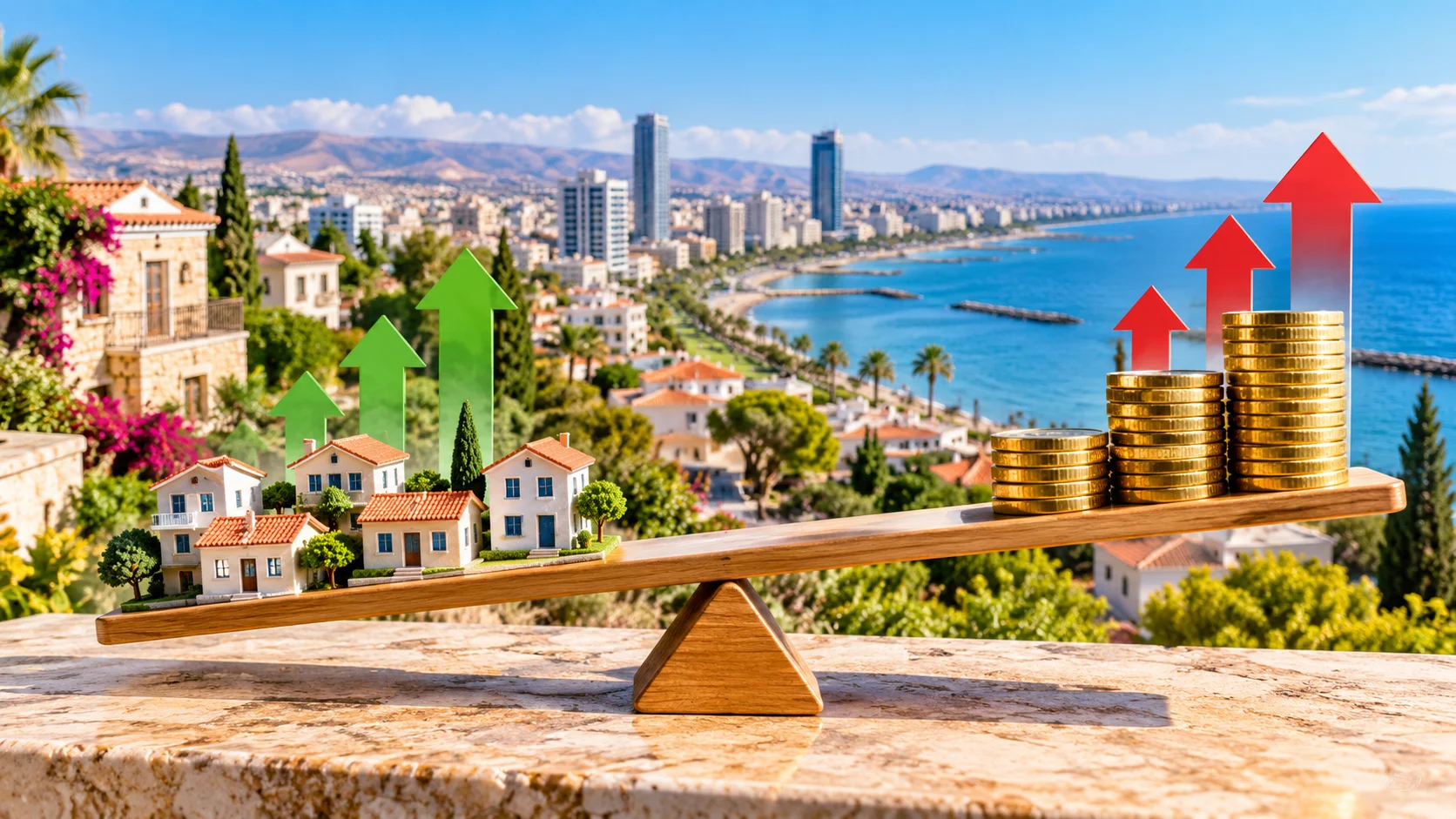
Two friends buy apartments in Cyprus in the same year. One buys a two-bedroom near the seafront in Limassol, the other a similar flat in a quiet Nicosia suburb. A few years later, one property has risen noticeably in value, while the other has barely moved. Neither of them was lucky or unlucky. They simply bought into markets with very different balances of supply and demand.Every property price is shaped by the same basic tension: how many people want to buy or rent, and how many suitable properties are available. Understanding that balance won’t predict the market perfectly. It will, however, help you make far better decisions as a buyer, seller or investor.What drives demandDemand for property in Cyprus comes from several directions at once:Local households. Young people moving out, couples starting families and people upgrading to larger homes form the core of the market.Jobs and relocation. International companies setting up in Limassol, Larnaca and Nicosia bring employees who need somewhere to live, often renting first and buying later.Students. Universities create steady rental demand in the areas around them.Foreign buyers. Holiday-home buyers, retirees and investors from abroad play a large role in some coastal areas.Investors. When rental returns look attractive, investors enter the market, adding further demand.The cost and availability of mortgages also matter. When borrowing becomes more expensive or banks tighten their criteria, fewer buyers can act, even if the desire to buy is still there.What limits supplyOn the supply side, new homes can’t simply appear when demand rises:Land and planning. Building is only possible where planning zones allow it, and the best-located land is limited.Time. From buying land to obtaining permits and completing construction, a project can take years. Supply always reacts to demand with a delay.Construction costs. Higher prices for materials and labour, and shortages of skilled workers, make some projects less viable and slow down new supply.Existing stock. Older properties, homes without title deeds and buildings that need renovation are part of the supply, but not all of them are attractive to today’s buyers.One market, many marketsThere is no single “Cyprus property market”. Supply and demand can look completely different depending on the city, the area and the type of property.A district with strong job growth and little available land behaves very differently from an area where many new apartment blocks are being completed at the same time. Luxury seafront apartments, family homes in the suburbs, student flats and building plots each have their own buyers and their own balance. A headline about “rising prices” or “a slowing market” may not apply to the property you are interested in at all.Signs worth watchingYou don’t need to be an economist to follow the market. A few indicators give a useful picture:Sales activity. The Department of Lands and Surveys publishes data on sales contracts deposited, which shows how active buyers are.Building permits. Figures from the Statistical Service show how much new construction is in the pipeline.Rents and time on market. How quickly properties let or sell, and whether asking prices are being reduced, often tells you more than any headline.What’s being built near you. A walk around an area and a look at active construction sites can be very revealing.What it means for youFor buyers: in areas where demand clearly exceeds supply, good properties move quickly and there is less room to negotiate. In areas with plenty of new stock, you may have more choice and more bargaining power.For sellers: pricing in line with real demand matters more than ever. In a market with many similar properties available, an overpriced home can sit unsold for months.For investors: look for areas with strong, varied demand and limited new supply. Be cautious where large amounts of similar new property are about to be completed at the same time.If you’d like a clearer picture of the market in a specific area, G&P Lazarou Estate Agents can share what we’re seeing on the ground. Call +357 22024949, email info@gplazarou.com or visit gplazarou.com.Discover available houses for sale in CyprusView residential plots for sale in CyprusExplore modern apartments for sale in CyprusBrowse commercial properties for sale in CyprusDiscover available houses for rent in CyprusExplore modern apartments for rent in CyprusView residential plots for rent in CyprusBrowse commercial properties for rent in Cyprus
Read More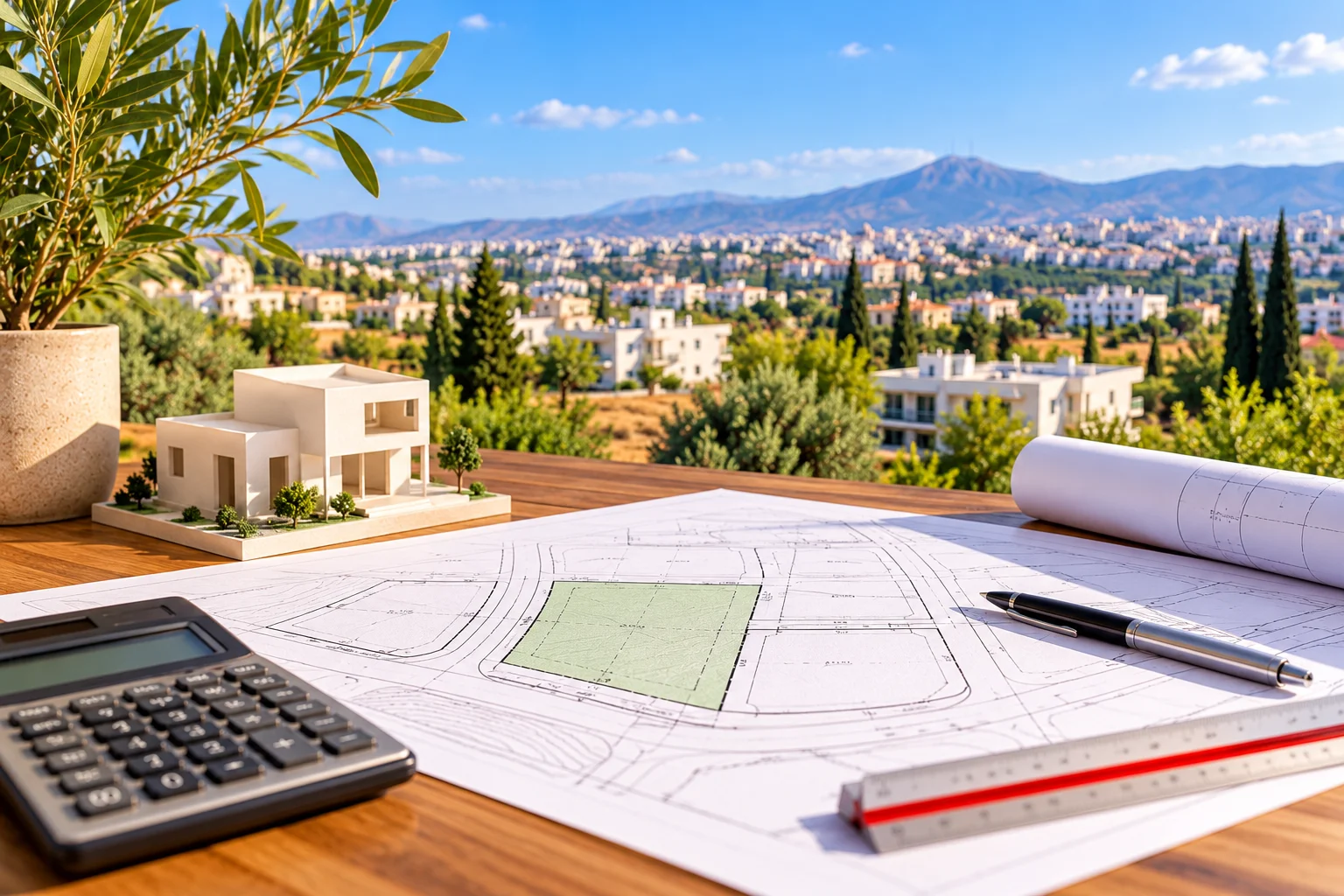
On a site plan, two plots of 600 square metres look like equals. Same area, same planning zone, same building density on paper. Then an architect sketches a house on each. On the first, a neat rectangle, the design comes together easily: good-sized rooms, a garden at the back and parking at the front. On the second, a long wedge that narrows towards the rear, the house has to squeeze into an awkward triangle, part of the land ends up unusable, and the plans keep getting more complicated.Most buyers focus on a plot’s size and location. Its shape gets far less attention, even though it often decides how much of the permitted building you can actually achieve, and at what cost.Why shape matters at allEvery plot comes with rules about how far a building must sit from the boundaries and the road. These setbacks apply regardless of shape. On a regular, well-proportioned plot, the space left in the middle is usable and easy to design around. On an odd-shaped plot, setbacks can eat into the buildable area much more than you’d expect, and what remains may be too narrow or too irregular for a sensible layout.The result is that two plots with the same building density on paper can produce very different homes in practice.Narrow and deep plotsA long, narrow plot can work, but width is everything. Once the side setbacks are taken off, the house may end up long and thin, with rooms lined up in a row and little natural light reaching the middle. Parking and access along one side can take up even more of the usable width.Architects can design clever homes on narrow plots. It usually takes more design effort, though, and it limits your options.Irregular and triangular plotsPlots with angled boundaries or many corners often leave pockets of land that can’t be built on or used well. Following an irregular boundary also tends to produce a building with more corners, longer external walls and a more complex roof. All of that adds to construction costs and sometimes to engineering fees as well.Sometimes an irregular plot is priced lower for exactly this reason. That can be a good opportunity, as long as you understand what can realistically be built before you buy.Corner plotsCorner plots have two road frontages, which brings real advantages: more light, more openness, flexible access and a stronger street presence. The trade-off is that setback rules from both roads may apply, which can reduce the buildable area. Privacy can also be harder to achieve, and the garden is more exposed.Frontage and accessThe width of the plot along the road affects more than looks. It decides where the entrance and parking can go and how easily vehicles can get in and out. A very narrow frontage on a deep plot can make access awkward, especially if more than one home is planned.If the road in front is due to be widened, part of the frontage may be lost. Always check this before buying.How shape affects the budgetThe shape of a plot can push up costs in ways that don’t show in the asking price:More external walls and corners mean more materials and labour.Complex roofs and structural solutions cost more to design and build.Unusable corners still need fencing, landscaping or retaining walls.A layout that doesn’t reach the full permitted building area means you are paying for land you can’t use.Check before you commitBefore buying a plot, ask an architect for a quick feasibility sketch. It doesn’t need to be a full design, just enough to show what can realistically be built, where the house would sit and how much of the permitted building area can be achieved.Compare plots by price per buildable square metre, not just total price. And if an adjoining plot is also for sale, ask whether combining the two could create a much better shape.Looking for the right plot to build on? G&P Lazarou Estate Agents can help you find land that suits your plans and check the key details before you commit. Call +357 22024949, email info@gplazarou.com or visit gplazarou.com.Land for Sale in Nicosia Land for Sale in Limassol Land for Sale in Larnaca Land for Sale in Famagusta Land for Sale in Paphos
Read More
Almost every week, an investor sits across the table from us and asks the same question: where should I buy? Most of them arrive with a budget and a list of properties. Fewer arrive with a view on the area itself. Yet over the years, the location tends to decide far more of the return than the kitchen, the finishes or even the price paid.So what separates an area that rewards investors from one that just looks good on a listing?People need a reason to live thereRental demand doesn’t appear on its own. It follows jobs, studies and services. Areas close to major employers, business districts, universities and hospitals tend to have a steady flow of tenants, because people want to live near where they spend their day.In Nicosia, for example, the streets around universities attract students and academic staff year after year. Areas near government offices and banks draw professionals. In Limassol, international companies have created strong demand from relocating employees.The key question to ask about any area is: who will rent here, and why?More than one source of demandAn area that depends on a single source of tenants carries more risk. If a large employer relocates, a university shrinks or tourism has a bad season, rental demand can drop quickly.The most resilient areas attract a mix of tenants: students, families, professionals and retirees. When one group slows down, the others keep the market moving.Infrastructure and what’s coming nextNew roads, improved public spaces, schools, shopping centres and business developments can change how desirable an area is. Investors who understand what is planned, not just what exists today, often see the benefit over time.Be careful to tell the difference between a project that has been approved and funded and one that has only been talked about. Many promised developments take years longer than expected, and some never happen. Buy on the basis of what is reasonably certain, not on rumour.Planning policy mattersChanges to local plans can shift values in either direction. An increase in permitted building density can add value to land and older properties. A new restriction can limit future potential.For investors interested in plots or older houses, knowing the planning zone and any expected changes is essential.Watch the supply pipelineStrong demand is only half of the picture. If dozens of new apartment blocks are being built in the same area at the same time, new tenants and buyers will have plenty of choice. That can put pressure on rents and resale prices.Before buying, look around. Count the cranes, check what projects are under way and think about how your property will compare with what’s coming onto the market.Rent, price and resaleA good investment area offers a sensible relationship between purchase price and achievable rent. Very high prices with modest rents leave little room for return. Very low prices may reflect weak demand or other problems.Also think about the day you’ll want to sell. Areas with a deep pool of buyers, both owner-occupiers and investors, tend to be easier to exit when the time comes.Everyday quality of lifeTenants and buyers still choose places where life is easy. Supermarkets, cafés, parks, schools, parking and safe streets all count. An area people enjoy living in usually holds its appeal through market cycles.Do your homeworkBefore committing, visit at different times of day, talk to people who live there and compare actual rents and sale prices, not just advertised figures. Speak to a lawyer about the property itself and to an accountant about how rental income will be taxed.If you’re looking for an investment property, G&P Lazarou Estate Agents can help you compare areas, rental demand and opportunities across Cyprus. Call +357 22024949, email info@gplazarou.com or visit gplazarou.com.Discover available houses for sale in CyprusView residential plots for sale in CyprusExplore modern apartments for sale in CyprusBrowse commercial properties for sale in CyprusDiscover available houses for rent in CyprusExplore modern apartments for rent in CyprusView residential plots for rent in CyprusBrowse commercial properties for rent in Cyprus
Read More