Blog & News
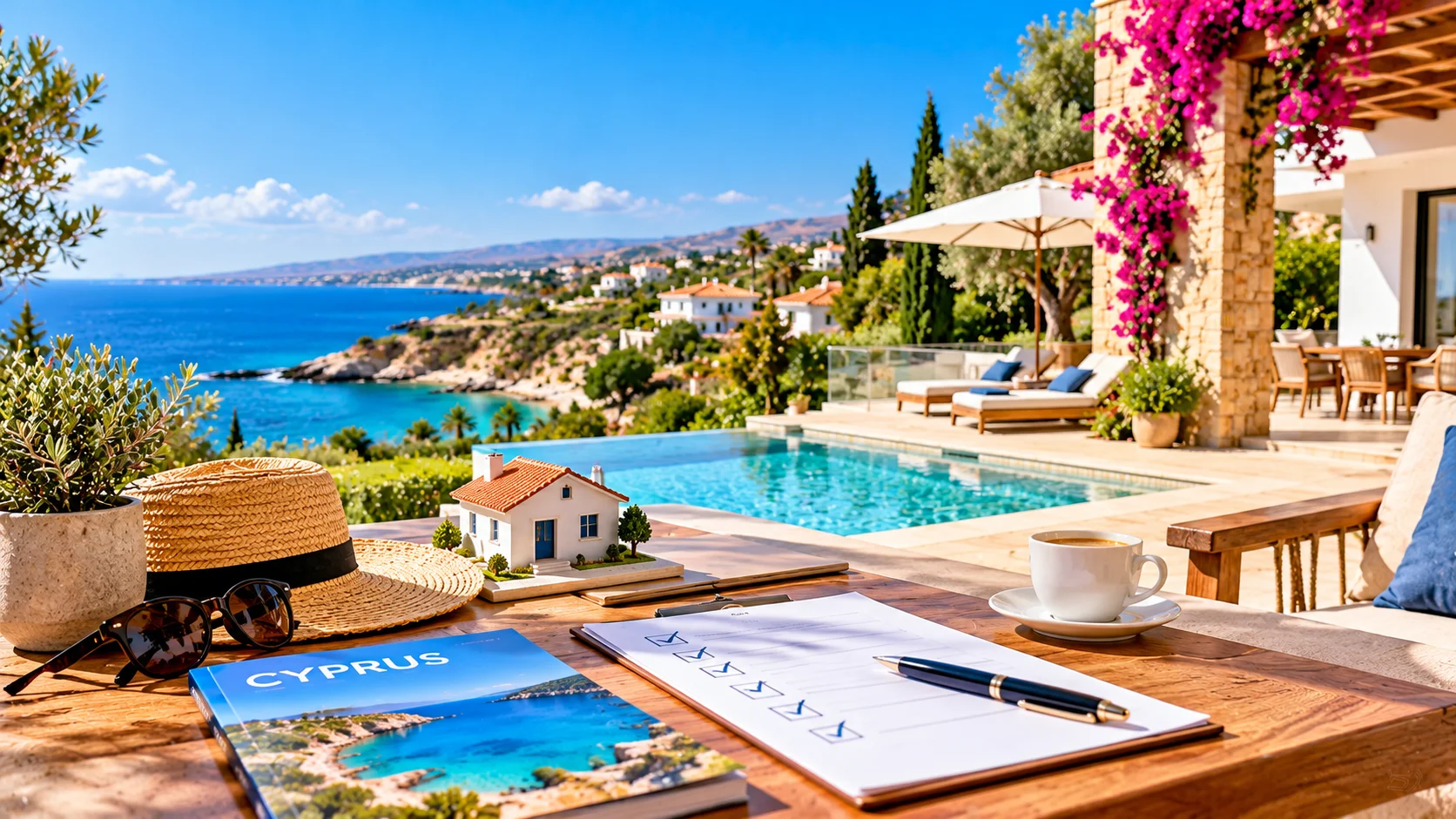
Many holiday homes in Cyprus are bought on the last day of a great trip. The sun is setting over the sea, the week has been perfect, and a small apartment five minutes from the beach suddenly seems like the obvious next step. Some of those purchases turn out to be the best decision the owners ever made. Others become a source of bills, worries and long flights to fix a leaking roof.The difference usually comes down to how much thought went in before signing.Start with how you’ll actually use itBe honest about how often you’ll come. A few weeks every summer? Several long stays a year? Eventually moving here for retirement?The answer shapes almost everything else. A property you’ll visit twice a year needs to be easy to lock up and leave. A home you’ll spend months in needs to feel comfortable in January as well as in August.Choosing the locationCyprus offers very different kinds of holiday living:Coastal towns and resorts such as Paphos, Limassol, Larnaca, Ayia Napa and Protaras offer beaches, restaurants and a lively summer. Some resort areas become very quiet in winter, which suits some owners and not others.Villages near the coast give you a more local feel and often more space, with the beach a short drive away.Mountain villages in the Troodos area offer cooler summers, fresh air and a completely different pace, with snow on the higher peaks in winter.Think about travel too. Being within easy reach of Larnaca or Paphos airport makes short visits far more practical.Will you rent it out?Many owners plan to let their holiday home when they’re not using it. Before counting on that income, consider:Licensing. Short-term holiday letting in Cyprus has registration and licensing requirements. Check the current rules with the Deputy Ministry of Tourism.Your own use. The weeks you most want to be there are usually the weeks it would earn the most.Management. Someone will need to handle bookings, cleaning, key handovers and guest issues. That has a cost.Tax. Rental income needs to be declared. Speak to an accountant about how it will be taxed, both in Cyprus and in your home country.Looking after a property from a distanceAn empty home needs care. Winter damp, a pool that needs cleaning, a garden that needs water and appliances that fail while you’re away are all common. Sea air can also be hard on metal fittings and air-conditioning units. Before you buy, find out who will check on the property and what that will cost.In a complex, ask about the common expenses, what they cover and how well the development is managed. A tired, poorly run complex affects both your enjoyment and your resale value.Check the legal side carefullyWhether you’re buying a resale property or something new, have an independent lawyer confirm:That the property has its own title deed, or when one is expected.That the building and any additions have the right permits.That there are no mortgages or other charges registered against it.If the title deed hasn’t been issued, make sure the sale contract is deposited with the Department of Lands and Surveys.Buyers from outside the EU may need permission to acquire property in Cyprus. If you’re buying a new property, ask your lawyer about VAT. Reduced rates generally apply to a main residence, not to a second home.Budget for more than the priceBeyond the purchase price, allow for:Legal fees and transfer fees.Furnishing.Annual common expenses and utility bills.Insurance, maintenance and, if you let the property, management fees.If you’re borrowing, check early with banks about lending to non-residents and what they require.Think about the futureAsk yourself who would buy this property from you one day. A well-located home with sound paperwork and broad appeal is far easier to sell than an unusual property in an area that only comes alive for two months a year.Thinking about a holiday home in Cyprus? With offices in Nicosia, Larnaca and Limassol, G&P Lazarou Estate Agents can help you find the right property and check the key details before you commit. Call +357 22024949, email info@gplazarou.com or visit gplazarou.com.Discover available houses for sale in CyprusView residential plots for sale in CyprusExplore modern apartments for sale in CyprusBrowse commercial properties for sale in CyprusDiscover available houses for rent in CyprusExplore modern apartments for rent in CyprusView residential plots for rent in CyprusBrowse commercial properties for rent in CyprusDiscover available houses for rent in NicosiaExplore apartments for rent in NicosiaView plots for rent in NicosiaBrowse retail properties for rent in NicosiaDiscover office spaces for rent in NicosiaView warehouses for rent in NicosiaExplore buildings for rent in NicosiaDiscover available houses for sale in NicosiaExplore apartments for sale in NicosiaView plots for sale in NicosiaBrowse retail properties for sale in NicosiaDiscover office spaces for sale in NicosiaView warehouses for sale in NicosiaExplore buildings for sale in Nicosia
Read More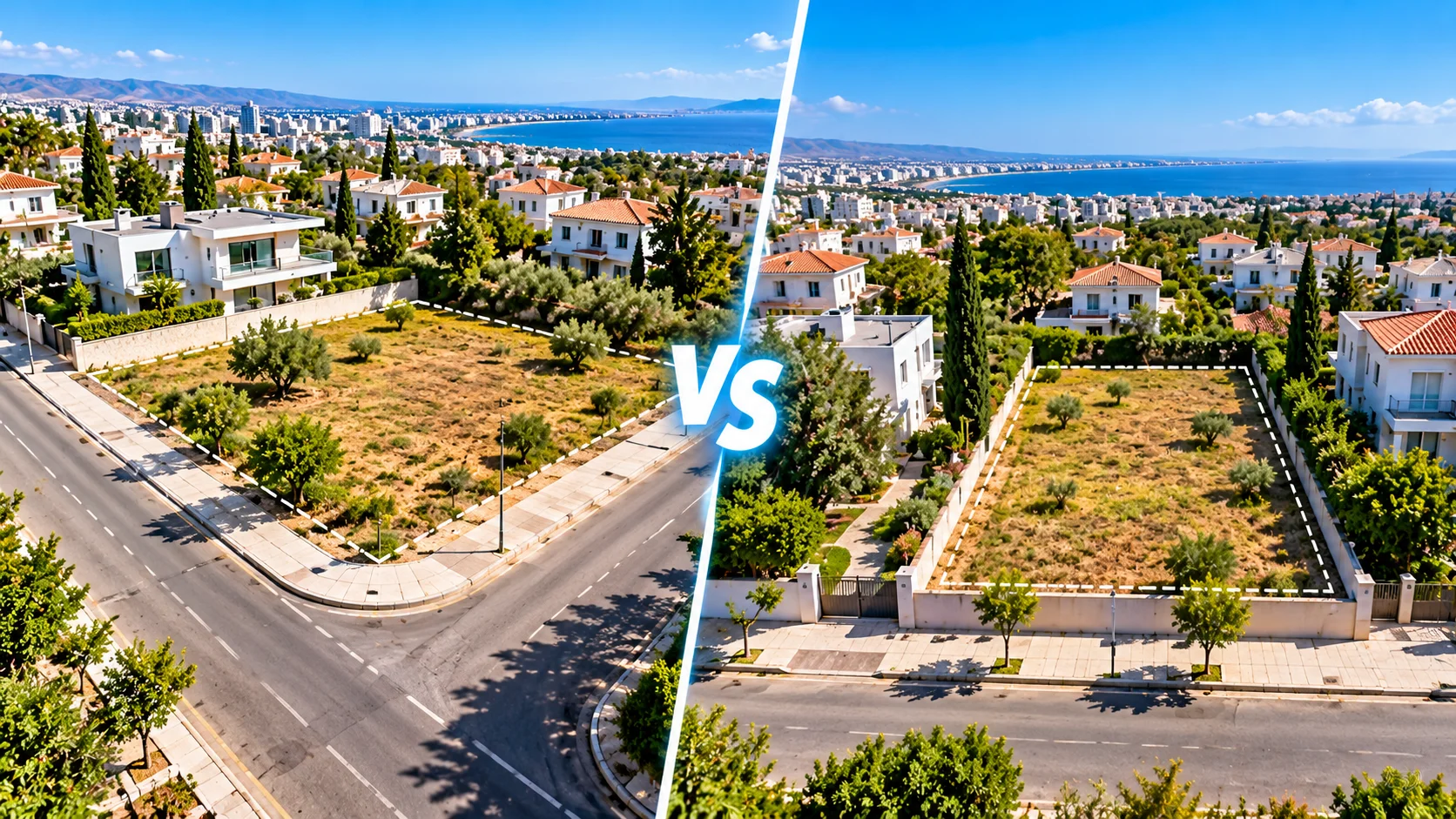
Ask ten buyers whether they’d prefer a corner plot and most will say yes without hesitating. It sounds better: more open, more prominent, more light. Ask ten architects and you’ll get a more careful answer. A corner plot can be the best site on the street, or it can be the one that causes the most headaches. It all depends on the plot itself and what you plan to build.What a corner plot offersThe main advantage is having two road frontages instead of one, and that opens up several possibilities.More light and air. With roads on two sides, the house can face out in more than one direction. Rooms get natural light from two aspects and cross-ventilation is easier, which makes a real difference in a Cyprus summer.Flexible access. You can choose which road to use for the main entrance and which for parking or a garage. On plots intended for two homes, each can have its own separate access.Visibility. A corner position stands out. For mixed-use buildings, shops or offices on the ground floor, that visibility has clear commercial value.Design freedom. Two street-facing sides give an architect more scope for an interesting building, rather than a single front with blank side walls.What a corner plot costs youThe same features that make corner plots attractive also bring trade-offs.Setbacks from two roads. Buildings usually need to sit back from the road. With two roads, those requirements may apply on two sides, which can shrink the area you can actually build on. At junctions, there may also be requirements to keep sightlines clear for traffic.Less privacy. More of the house and garden is visible from the street. Achieving a private outdoor space usually takes careful design, walls or planting.Noise and traffic. Corners often see more passing cars, especially if one of the roads is busy or becomes a shortcut. Headlights at night and traffic stopping at the junction can be a nuisance.More frontage to finish. Two street-facing sides mean more fencing, landscaping and boundary work.A higher price. Corner plots are often priced at a premium. The question is whether you’ll use the advantages enough to justify paying it.Double the road-widening risk. If either road is planned for widening, part of the plot could be affected. With two roads, check both.What a standard plot offersA plot with a single road frontage, between neighbouring plots, is usually simpler to deal with. The house can be designed around a private rear garden, away from the street. It tends to be quieter, and outdoor space is easier to keep private, which many families value highly.Standard plots are often more affordable too, and the setback rules are usually more straightforward.The trade-off is less flexibility. Light comes from fewer directions, access is through one frontage only, and the side walls facing neighbours limit where windows can go.So which is better?It depends on what you want from the plot.A corner plot usually makes more sense if:You plan a mixed-use or commercial building.You want two separate homes with independent access.Light and openness are your top priorities.A standard plot is usually the better choice if:You’re building a family home.Privacy, quiet and a usable garden matter most.You want a simpler design and a lower purchase price.Before you decideCompare plots on what they actually allow you to build, not just on their size or position. Ask an architect for a quick sketch showing the buildable area once setbacks are applied. Check the planning zone, building density and any road-widening plans for every road the plot touches. Then compare prices per buildable square metre.Visit at different times of day too. A corner that feels quiet on a Sunday morning can look very different at rush hour.Looking for a plot to build on? G&P Lazarou Estate Agents can help you compare options and check the key details before you commit. Call +357 22 024949, email info@gplazarou.com or visit gplazarou.com.Land for Sale in NicosiaLand for Sale in LimassolLand for Sale in LarnacaLand for Sale in FamagustaLand for Sale in Paphos
Read More
Two friends buy apartments in Cyprus in the same year. One buys a two-bedroom near the seafront in Limassol, the other a similar flat in a quiet Nicosia suburb. A few years later, one property has risen noticeably in value, while the other has barely moved. Neither of them was lucky or unlucky. They simply bought into markets with very different balances of supply and demand.Every property price is shaped by the same basic tension: how many people want to buy or rent, and how many suitable properties are available. Understanding that balance won’t predict the market perfectly. It will, however, help you make far better decisions as a buyer, seller or investor.What drives demandDemand for property in Cyprus comes from several directions at once:Local households. Young people moving out, couples starting families and people upgrading to larger homes form the core of the market.Jobs and relocation. International companies setting up in Limassol, Larnaca and Nicosia bring employees who need somewhere to live, often renting first and buying later.Students. Universities create steady rental demand in the areas around them.Foreign buyers. Holiday-home buyers, retirees and investors from abroad play a large role in some coastal areas.Investors. When rental returns look attractive, investors enter the market, adding further demand.The cost and availability of mortgages also matter. When borrowing becomes more expensive or banks tighten their criteria, fewer buyers can act, even if the desire to buy is still there.What limits supplyOn the supply side, new homes can’t simply appear when demand rises:Land and planning. Building is only possible where planning zones allow it, and the best-located land is limited.Time. From buying land to obtaining permits and completing construction, a project can take years. Supply always reacts to demand with a delay.Construction costs. Higher prices for materials and labour, and shortages of skilled workers, make some projects less viable and slow down new supply.Existing stock. Older properties, homes without title deeds and buildings that need renovation are part of the supply, but not all of them are attractive to today’s buyers.One market, many marketsThere is no single “Cyprus property market”. Supply and demand can look completely different depending on the city, the area and the type of property.A district with strong job growth and little available land behaves very differently from an area where many new apartment blocks are being completed at the same time. Luxury seafront apartments, family homes in the suburbs, student flats and building plots each have their own buyers and their own balance. A headline about “rising prices” or “a slowing market” may not apply to the property you are interested in at all.Signs worth watchingYou don’t need to be an economist to follow the market. A few indicators give a useful picture:Sales activity. The Department of Lands and Surveys publishes data on sales contracts deposited, which shows how active buyers are.Building permits. Figures from the Statistical Service show how much new construction is in the pipeline.Rents and time on market. How quickly properties let or sell, and whether asking prices are being reduced, often tells you more than any headline.What’s being built near you. A walk around an area and a look at active construction sites can be very revealing.What it means for youFor buyers: in areas where demand clearly exceeds supply, good properties move quickly and there is less room to negotiate. In areas with plenty of new stock, you may have more choice and more bargaining power.For sellers: pricing in line with real demand matters more than ever. In a market with many similar properties available, an overpriced home can sit unsold for months.For investors: look for areas with strong, varied demand and limited new supply. Be cautious where large amounts of similar new property are about to be completed at the same time.If you’d like a clearer picture of the market in a specific area, G&P Lazarou Estate Agents can share what we’re seeing on the ground. Call +357 22024949, email info@gplazarou.com or visit gplazarou.com.Discover available houses for sale in CyprusView residential plots for sale in CyprusExplore modern apartments for sale in CyprusBrowse commercial properties for sale in CyprusDiscover available houses for rent in CyprusExplore modern apartments for rent in CyprusView residential plots for rent in CyprusBrowse commercial properties for rent in Cyprus
Read More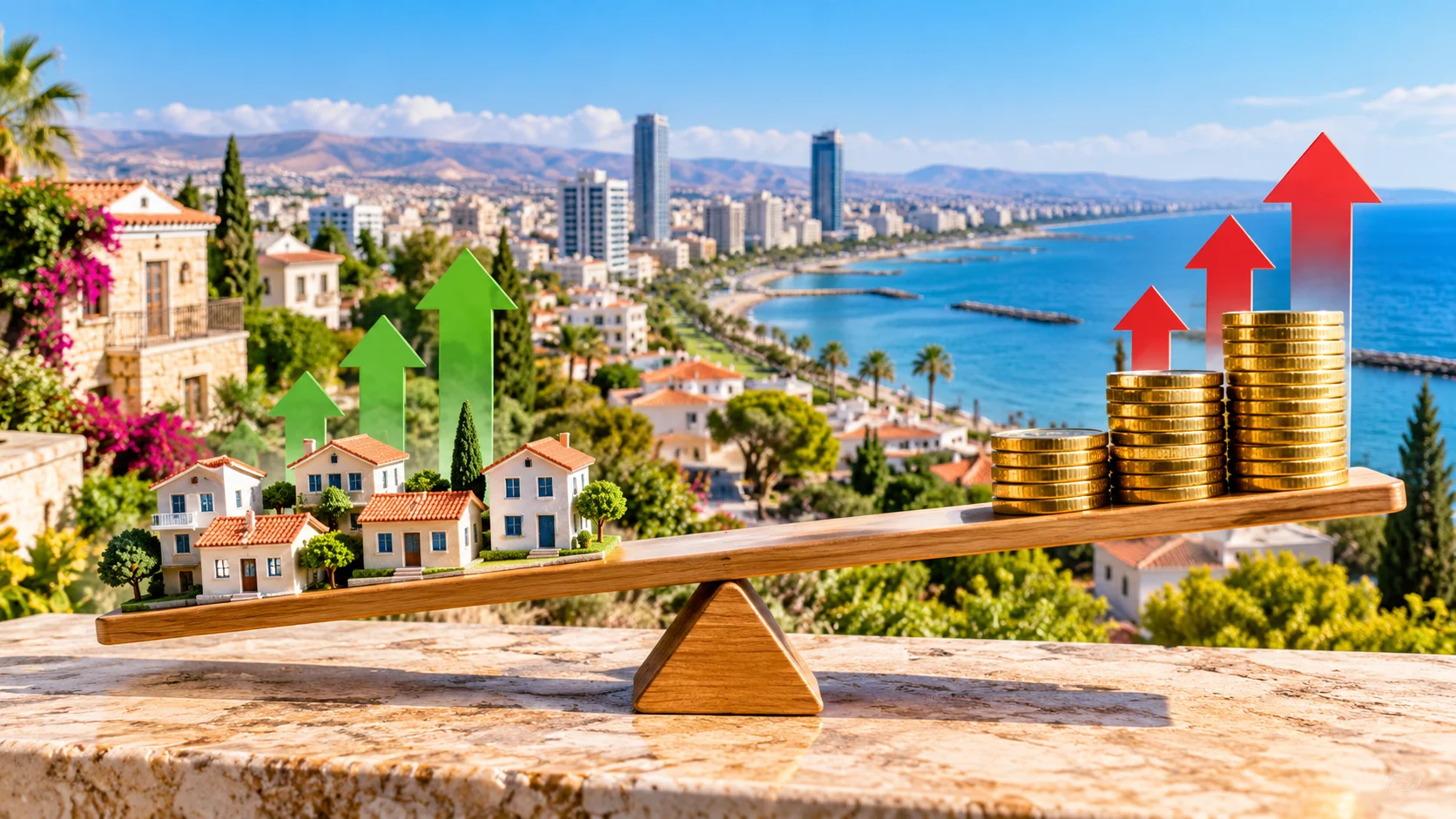
Two friends buy apartments in Cyprus in the same year. One buys a two-bedroom near the seafront in Limassol, the other a similar flat in a quiet Nicosia suburb. A few years later, one property has risen noticeably in value, while the other has barely moved. Neither of them was lucky or unlucky. They simply bought into markets with very different balances of supply and demand.Every property price is shaped by the same basic tension: how many people want to buy or rent, and how many suitable properties are available. Understanding that balance won’t predict the market perfectly. It will, however, help you make far better decisions as a buyer, seller or investor.What drives demandDemand for property in Cyprus comes from several directions at once:Local households. Young people moving out, couples starting families and people upgrading to larger homes form the core of the market.Jobs and relocation. International companies setting up in Limassol, Larnaca and Nicosia bring employees who need somewhere to live, often renting first and buying later.Students. Universities create steady rental demand in the areas around them.Foreign buyers. Holiday-home buyers, retirees and investors from abroad play a large role in some coastal areas.Investors. When rental returns look attractive, investors enter the market, adding further demand.The cost and availability of mortgages also matter. When borrowing becomes more expensive or banks tighten their criteria, fewer buyers can act, even if the desire to buy is still there.What limits supplyOn the supply side, new homes can’t simply appear when demand rises:Land and planning. Building is only possible where planning zones allow it, and the best-located land is limited.Time. From buying land to obtaining permits and completing construction, a project can take years. Supply always reacts to demand with a delay.Construction costs. Higher prices for materials and labour, and shortages of skilled workers, make some projects less viable and slow down new supply.Existing stock. Older properties, homes without title deeds and buildings that need renovation are part of the supply, but not all of them are attractive to today’s buyers.One market, many marketsThere is no single “Cyprus property market”. Supply and demand can look completely different depending on the city, the area and the type of property.A district with strong job growth and little available land behaves very differently from an area where many new apartment blocks are being completed at the same time. Luxury seafront apartments, family homes in the suburbs, student flats and building plots each have their own buyers and their own balance. A headline about “rising prices” or “a slowing market” may not apply to the property you are interested in at all.Signs worth watchingYou don’t need to be an economist to follow the market. A few indicators give a useful picture:Sales activity. The Department of Lands and Surveys publishes data on sales contracts deposited, which shows how active buyers are.Building permits. Figures from the Statistical Service show how much new construction is in the pipeline.Rents and time on market. How quickly properties let or sell, and whether asking prices are being reduced, often tells you more than any headline.What’s being built near you. A walk around an area and a look at active construction sites can be very revealing.What it means for youFor buyers: in areas where demand clearly exceeds supply, good properties move quickly and there is less room to negotiate. In areas with plenty of new stock, you may have more choice and more bargaining power.For sellers: pricing in line with real demand matters more than ever. In a market with many similar properties available, an overpriced home can sit unsold for months.For investors: look for areas with strong, varied demand and limited new supply. Be cautious where large amounts of similar new property are about to be completed at the same time.If you’d like a clearer picture of the market in a specific area, G&P Lazarou Estate Agents can share what we’re seeing on the ground. Call +357 22024949, email info@gplazarou.com or visit gplazarou.com.Discover available houses for sale in CyprusView residential plots for sale in CyprusExplore modern apartments for sale in CyprusBrowse commercial properties for sale in CyprusDiscover available houses for rent in CyprusExplore modern apartments for rent in CyprusView residential plots for rent in CyprusBrowse commercial properties for rent in Cyprus
Read More
On a site plan, two plots of 600 square metres look like equals. Same area, same planning zone, same building density on paper. Then an architect sketches a house on each. On the first, a neat rectangle, the design comes together easily: good-sized rooms, a garden at the back and parking at the front. On the second, a long wedge that narrows towards the rear, the house has to squeeze into an awkward triangle, part of the land ends up unusable, and the plans keep getting more complicated.Most buyers focus on a plot’s size and location. Its shape gets far less attention, even though it often decides how much of the permitted building you can actually achieve, and at what cost.Why shape matters at allEvery plot comes with rules about how far a building must sit from the boundaries and the road. These setbacks apply regardless of shape. On a regular, well-proportioned plot, the space left in the middle is usable and easy to design around. On an odd-shaped plot, setbacks can eat into the buildable area much more than you’d expect, and what remains may be too narrow or too irregular for a sensible layout.The result is that two plots with the same building density on paper can produce very different homes in practice.Narrow and deep plotsA long, narrow plot can work, but width is everything. Once the side setbacks are taken off, the house may end up long and thin, with rooms lined up in a row and little natural light reaching the middle. Parking and access along one side can take up even more of the usable width.Architects can design clever homes on narrow plots. It usually takes more design effort, though, and it limits your options.Irregular and triangular plotsPlots with angled boundaries or many corners often leave pockets of land that can’t be built on or used well. Following an irregular boundary also tends to produce a building with more corners, longer external walls and a more complex roof. All of that adds to construction costs and sometimes to engineering fees as well.Sometimes an irregular plot is priced lower for exactly this reason. That can be a good opportunity, as long as you understand what can realistically be built before you buy.Corner plotsCorner plots have two road frontages, which brings real advantages: more light, more openness, flexible access and a stronger street presence. The trade-off is that setback rules from both roads may apply, which can reduce the buildable area. Privacy can also be harder to achieve, and the garden is more exposed.Frontage and accessThe width of the plot along the road affects more than looks. It decides where the entrance and parking can go and how easily vehicles can get in and out. A very narrow frontage on a deep plot can make access awkward, especially if more than one home is planned.If the road in front is due to be widened, part of the frontage may be lost. Always check this before buying.How shape affects the budgetThe shape of a plot can push up costs in ways that don’t show in the asking price:More external walls and corners mean more materials and labour.Complex roofs and structural solutions cost more to design and build.Unusable corners still need fencing, landscaping or retaining walls.A layout that doesn’t reach the full permitted building area means you are paying for land you can’t use.Check before you commitBefore buying a plot, ask an architect for a quick feasibility sketch. It doesn’t need to be a full design, just enough to show what can realistically be built, where the house would sit and how much of the permitted building area can be achieved.Compare plots by price per buildable square metre, not just total price. And if an adjoining plot is also for sale, ask whether combining the two could create a much better shape.Looking for the right plot to build on? G&P Lazarou Estate Agents can help you find land that suits your plans and check the key details before you commit. Call +357 22024949, email info@gplazarou.com or visit gplazarou.com.Land for Sale in Nicosia Land for Sale in Limassol Land for Sale in Larnaca Land for Sale in Famagusta Land for Sale in Paphos
Read More
Almost every week, an investor sits across the table from us and asks the same question: where should I buy? Most of them arrive with a budget and a list of properties. Fewer arrive with a view on the area itself. Yet over the years, the location tends to decide far more of the return than the kitchen, the finishes or even the price paid.So what separates an area that rewards investors from one that just looks good on a listing?People need a reason to live thereRental demand doesn’t appear on its own. It follows jobs, studies and services. Areas close to major employers, business districts, universities and hospitals tend to have a steady flow of tenants, because people want to live near where they spend their day.In Nicosia, for example, the streets around universities attract students and academic staff year after year. Areas near government offices and banks draw professionals. In Limassol, international companies have created strong demand from relocating employees.The key question to ask about any area is: who will rent here, and why?More than one source of demandAn area that depends on a single source of tenants carries more risk. If a large employer relocates, a university shrinks or tourism has a bad season, rental demand can drop quickly.The most resilient areas attract a mix of tenants: students, families, professionals and retirees. When one group slows down, the others keep the market moving.Infrastructure and what’s coming nextNew roads, improved public spaces, schools, shopping centres and business developments can change how desirable an area is. Investors who understand what is planned, not just what exists today, often see the benefit over time.Be careful to tell the difference between a project that has been approved and funded and one that has only been talked about. Many promised developments take years longer than expected, and some never happen. Buy on the basis of what is reasonably certain, not on rumour.Planning policy mattersChanges to local plans can shift values in either direction. An increase in permitted building density can add value to land and older properties. A new restriction can limit future potential.For investors interested in plots or older houses, knowing the planning zone and any expected changes is essential.Watch the supply pipelineStrong demand is only half of the picture. If dozens of new apartment blocks are being built in the same area at the same time, new tenants and buyers will have plenty of choice. That can put pressure on rents and resale prices.Before buying, look around. Count the cranes, check what projects are under way and think about how your property will compare with what’s coming onto the market.Rent, price and resaleA good investment area offers a sensible relationship between purchase price and achievable rent. Very high prices with modest rents leave little room for return. Very low prices may reflect weak demand or other problems.Also think about the day you’ll want to sell. Areas with a deep pool of buyers, both owner-occupiers and investors, tend to be easier to exit when the time comes.Everyday quality of lifeTenants and buyers still choose places where life is easy. Supermarkets, cafés, parks, schools, parking and safe streets all count. An area people enjoy living in usually holds its appeal through market cycles.Do your homeworkBefore committing, visit at different times of day, talk to people who live there and compare actual rents and sale prices, not just advertised figures. Speak to a lawyer about the property itself and to an accountant about how rental income will be taxed.If you’re looking for an investment property, G&P Lazarou Estate Agents can help you compare areas, rental demand and opportunities across Cyprus. Call +357 22024949, email info@gplazarou.com or visit gplazarou.com.Discover available houses for sale in CyprusView residential plots for sale in CyprusExplore modern apartments for sale in CyprusBrowse commercial properties for sale in CyprusDiscover available houses for rent in CyprusExplore modern apartments for rent in CyprusView residential plots for rent in CyprusBrowse commercial properties for rent in Cyprus
Read More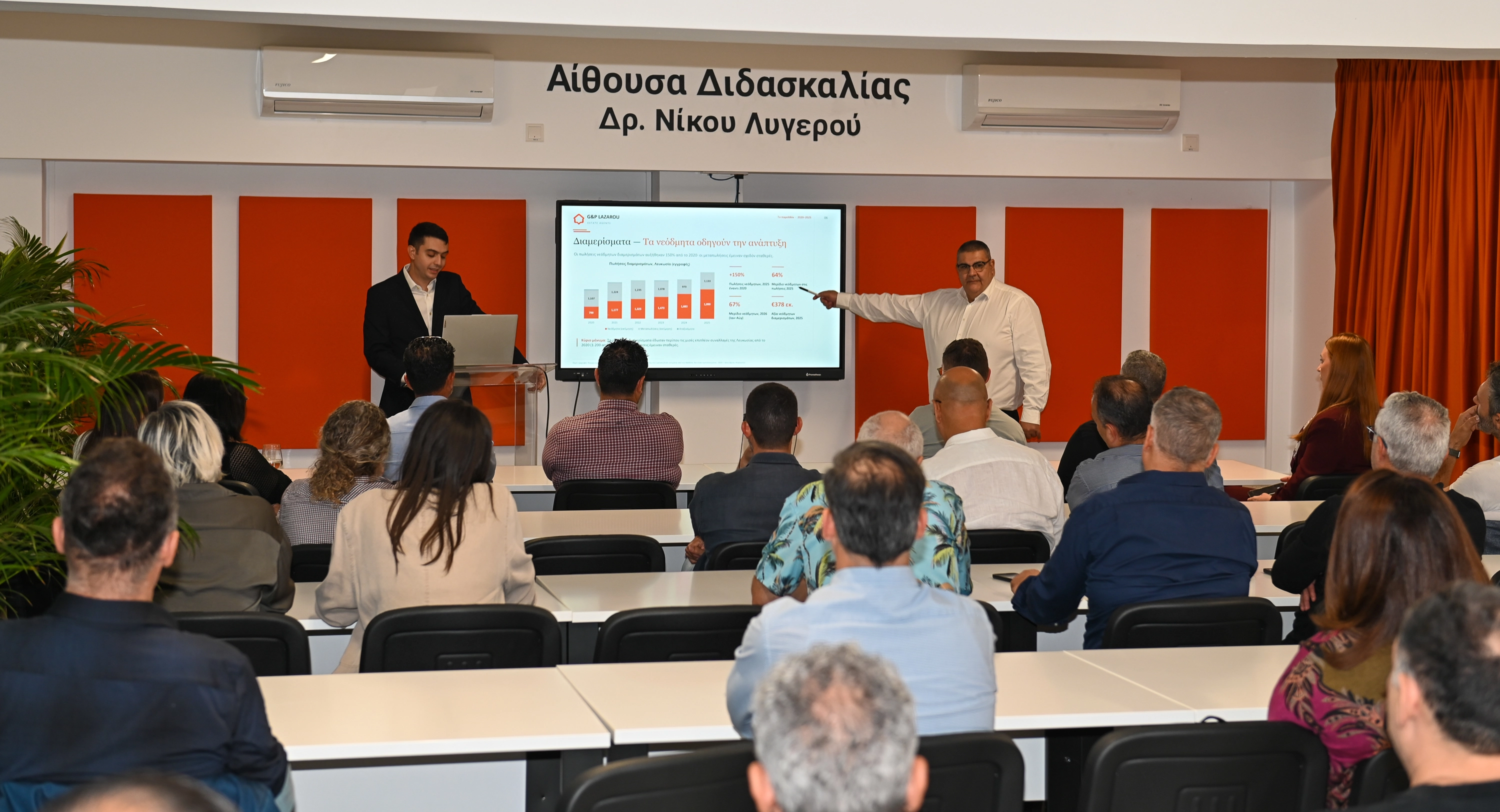
Nicosia recorded more property transactions in 2025 than any other district in Cyprus. Over the same period, home prices in the capital rose by less than inflation. These two facts sit at the heart of “Nicosia Property Market 2026”, the market analysis presented by G&P Lazarou Estate Agents on Tuesday 20 October 2026 at our head office, Nicosia Office, Athalassas Avenue 174, 2025 Strovolos, to property developers.The analysis was presented by Andreas Markides, ACA, Head of Investments at G&P Lazarou. It brings together transaction data from AskWire, official figures from the Department of Lands and Surveys, the Central Bank of Cyprus, the Statistical Service (CYSTAT) and Eurostat, and a count of properties currently listed for sale in Nicosia.Here are the main findings:2020–2025: a market that grew in volume, not in priceNicosia recorded 7,911 transaction registrations in 2025. That figure was ahead of Limassol’s 7,715, 10.4% higher than in 2024 and 42% higher than in 2020. Limassol still leads by value, though. The average value per registration in Nicosia was about €161,000, compared with roughly €363,000 in Limassol.New-build apartments drove much of this growth. Sales rose from 799 in 2020 to 1,999 in 2025, an increase of 150%, while resales stayed almost flat. House sales also grew strongly, from 763 to 1,204. Yet the average declared value of a house in 2025, around €238,000, was the same as in 2020.Nicosia is also the most affordable of the major markets. In 2025, 87% of apartment and house sales in the district were below €300,000, compared with 72% across Cyprus.Prices did rise, but slowly. Home prices in Nicosia increased by about 10% since 2020, while consumer prices rose 18.5% and construction materials around 35%. In real terms, that leaves Nicosia home prices roughly 7% lower than in 2020.The picture varies by area. Typical resale apartment prices per weighted square metre rose by about 20% in Lakatamia and 18% in Engomi, but less than 2% in Strovolos.Land stands out. The median price of plots in Nicosia was about €265 per buildable square metre in 2025, around 5% lower than in 2020. In Limassol, Larnaca and Paphos, the equivalent figure rose by roughly 36%.Nicosia also leads the island’s office market by number of sales. In 2025, 88 of the 160 office sales in Cyprus, or 55%, were in Nicosia.2026: local buyers and more expensive moneyActivity has paused rather than reversed. Registrations in Nicosia from January to August 2026 were 3.4% lower than a year earlier. Sales contracts deposited with the Land Registry still rose 5.6%, although that was the slowest growth of any district (Cyprus overall: +13.7%).Nicosia is the most local market on the island. From January to July 2026, 84% of sales contracts in the district were signed by Cypriot buyers. Foreign buyers accounted for under 16%, compared with almost 70% in Paphos. Demand in the capital therefore depends mainly on local incomes and bank lending.That makes financing a key variable. The average rate on new housing loans in Cyprus was 3.24% in July 2026, below the eurozone average of 3.54%. After two increases by the European Central Bank this year, the deposit rate stands at 2.50%. Bank lending criteria, however, remained unchanged in the second quarter of 2026.Development activity is picking up again. In the first eight months of 2026, 92 land-for-development (antiparochi) contracts were registered in Nicosia, compared with 61 in the whole of 2025.What is available todayOn 16 October 2026, the analysis counted 8,368 properties listed for sale in Nicosia across five portfolios: G&P Lazarou, REMU, Altia, Altamira and GoGordian. Their combined asking value was around €2.9 billion.The four institutional portfolios held 1,557 listings worth about €539 million. Around 65% of that value is land, mostly fields rather than ready-to-build plots, and only 44 listings are apartments. Most modern apartments on the market today are new builds.Comparing current stock with monthly transactions in 2025 gives an indication of how quickly the market could absorb it. The figure is roughly 11.5 months for apartments, around 8 months for houses and about 21 months for plots.What they said“Nicosia has grown in volume, but its prices have risen by less than inflation. It is the most local market in Cyprus: it depends on the incomes and borrowing of Cypriot buyers, not on foreign capital. That is why the question for 2027 is not prices, but whether the market can absorb what is coming,” said Andreas Markides, ACA, Head of Investments at G&P Lazarou.“We are bringing to the table data that is rarely found in one place: transactions, available stock and our own listings. We want decisions in the Nicosia market to be based on numbers, not impressions,” said Petros Lazarou, Founder and Managing Director of G&P Lazarou Estate Agents.2027: a question of absorption, not priceThe analysis does not forecast prices. It identifies the question that will shape the year ahead: can a market of mainly local buyers absorb the new supply that is coming, at a time of higher costs and more expensive borrowing?Supply is rising. Residential units in building permits across Cyprus increased by 43% in 2025 and 68% in the first half of 2026. Construction costs remain high, and many building companies report labour shortages as their main constraint.G&P Lazarou is watching four indicators to see which way the market moves:Mortgage rates. A move towards 3% would support demand. A rise above 4% would point to a more cautious year.Sales contracts in Nicosia. A return to double-digit growth would be positive. An annual decline would be a warning sign.Absorption of new builds. Falling months of stock would be encouraging. Completed apartments remaining unsold would not.Institutional land. Usable plots coming to market and selling would be positive. Land selling at a discount, with plot prices falling, would point the other way.About the dataTransaction figures are AskWire registrations, which include all transaction types and are not unique properties. Prices per square metre are medians from filtered samples and use weighted area, not internal floor area. Stock figures are public listings at asking prices on 16 October 2026, not valuations. All figures were correct as of mid-October 2026 and will change over time.Download the full presentation “Nicosia Property Market 2026” (PDF)To discuss what the findings mean for your property, investment or development, contact G&P Lazarou Estate Agents at +357 22 024949 or sales@gplazarou.com. For a property-specific opinion of value, see our property valuation services.
Read More
The family home is often the hardest part of an estate to deal with. It holds memories, it may have been in the family for decades, and suddenly several people have a say in what happens to it. Some want to sell quickly, some want to keep it, and others simply aren’t sure.Selling an inherited property is rarely just a property transaction. There are legal steps to complete first, people to agree, and practical questions about the house itself. Knowing what lies ahead makes the process far less stressful.First, the estate needs to be in orderAn inherited property can’t simply be listed the day after a loss. In Cyprus, the estate of the deceased is usually handled by an administrator or executor appointed through the court. Until that’s done, nobody has the authority to sell.Once the administration is in place, there are generally two routes. The property can be transferred into the names of the heirs, who then sell it themselves. Alternatively, the administrator can sell it as part of the estate. Which route makes more sense depends on the family’s situation, and your lawyer should guide you on this from the start.Getting all the heirs on the same pageWhen a property passes to more than one person, every co-owner usually needs to agree to the sale and to the price. This is where many inherited sales get stuck. One sibling lives abroad, another wants to keep the house, a third needs the money now.A few things help:An independent valuation. It gives everyone the same, neutral starting point, instead of each person relying on their own expectations.Clear communication. Agree early on who will deal with the agent, the lawyer and viewings.Practical arrangements for heirs abroad. A power of attorney can allow a family member or lawyer to sign on their behalf, avoiding repeated trips.If agreement can’t be reached, the matter may end up in court. That is usually slower and more expensive for everyone, so it’s worth working hard to avoid it.Older properties often come with older paperworkMany inherited homes were built decades ago, and the documents don’t always reflect what’s on the ground. Before going to market, check that:There is a valid title deed for the property.Extensions, enclosed verandas or additional rooms were properly permitted.There are no mortgages or other charges still registered.Sorting these issues out before you list saves time, and it avoids losing a buyer halfway through the sale.Think about tax earlyCyprus does not have inheritance tax. Selling the property, however, can have tax implications. The value of the property at the date of death can be important when calculating any tax due on a later sale, which is another reason a proper valuation is useful. Speak to an accountant or tax adviser before agreeing a sale, not after.Prepare the house for the marketAn inherited home is often full of furniture and belongings, and it may not have been updated for years. You don’t need to renovate, but clearing it out, cleaning thoroughly and carrying out small repairs can make a real difference to how buyers see it. If it has been empty for a while, check for damp, leaks and anything that needs attention before viewings start.If the property has a tenant, find out the terms of the tenancy, as this can affect both the sale process and the price.Take the time you need, within reasonThere’s no need to rush a decision you may regret. Leaving a property empty for years, though, brings its own costs: maintenance, security and gradual deterioration. Setting a realistic timeframe as a family usually helps everyone move forward.If you’re dealing with an inherited property, G&P Lazarou Estate Agents can guide you through the sale and work alongside your lawyer and accountant. Call +357 22024949, email info@gplazarou.com or visit gplazarou.com.Discover available houses for sale in CyprusView residential plots for sale in CyprusExplore modern apartments for sale in CyprusBrowse commercial properties for sale in CyprusDiscover available houses for rent in CyprusExplore modern apartments for rent in CyprusView residential plots for rent in CyprusBrowse commercial properties for rent in Cyprus
Read More
Two detached houses in Lakatamia were built in the same year, by the same builder, from almost the same plans. Each has three bedrooms, a garden and a similar plot. From the street you could easily mix them up. Yet if both went on the market tomorrow, a valuer might put a noticeably different figure on each.Owners are often surprised by this, especially when a neighbour's sale price becomes the benchmark for their own expectations. The truth is that "similar" covers a lot of ground, and the differences that matter most are often the ones you can't see from the pavement.The paperwork behind the propertyThis is where many of the biggest differences hide:Title deed: one house may have a clear title deed in the owner's name. The other may still be waiting for one, or be registered as a share of a larger plot.Permits: one may have every extension and enclosed veranda properly approved. The other may have additions that were never permitted.For a buyer, and especially for a bank, these points can matter more than a new kitchen. A property with paperwork problems may be harder to finance, take longer to sell and attract fewer buyers.What the plot still allowsWith houses and plots, part of the value lies in what hasn't been built yet. If one house uses only part of the building density allowed on its plot, the remaining area has value of its own. It could mean room for an extension, a second unit or, in some cases, future redevelopment. Two houses that look identical today can have very different potential tomorrow.Position and orientationSmall differences in position add up:A south-facing garden versus one in shade most of the day.A corner plot versus one squeezed between neighbours.A quiet cul-de-sac versus a road that has become a shortcut for traffic.With apartments, floor level, view and orientation can create a real gap between units in the same building.Condition and layoutTwo homes can look equally presentable while being very different underneath. One may have new wiring, plumbing and insulation. The other may have only a fresh coat of paint.Layout matters too. Space that works well, with sensible room sizes and no wasted corridors, is worth more to buyers than the same number of square metres used badly.Who lives there nowAn empty property or one let on a standard short tenancy is straightforward to sell. A property with a long-standing tenant who has strong legal protection is a different matter. In some cases it can affect the value considerably, because the buyer cannot easily take possession or adjust the rent. The terms of any existing tenancy should always be checked.What surrounds itChanges nearby can push value in either direction. A new park or school can help, while a large commercial development or busier road next door can hurt. Valuers also consider what is planned around the property, not only what is there today.So what does this mean for you?If you're selling, a neighbour's price is a reference point, not a guarantee. If you're buying, a lower price compared with a similar property is worth investigating rather than celebrating. In both cases, the only reliable way to understand the value of a specific property is to look at that property in detail: its documents, its condition, its plot and its surroundings.G&P Lazarou Property Valuation provides property valuation services across Cyprus. To discuss your property and the documents needed, contact the team at +357 22024949 or valuation@gplazarou.com.Discover available houses for sale in CyprusView residential plots for sale in CyprusExplore modern apartments for sale in CyprusBrowse commercial properties for sale in CyprusDiscover available houses for rent in CyprusExplore modern apartments for rent in CyprusView residential plots for rent in CyprusBrowse commercial properties for rent in Cyprus
Read More